
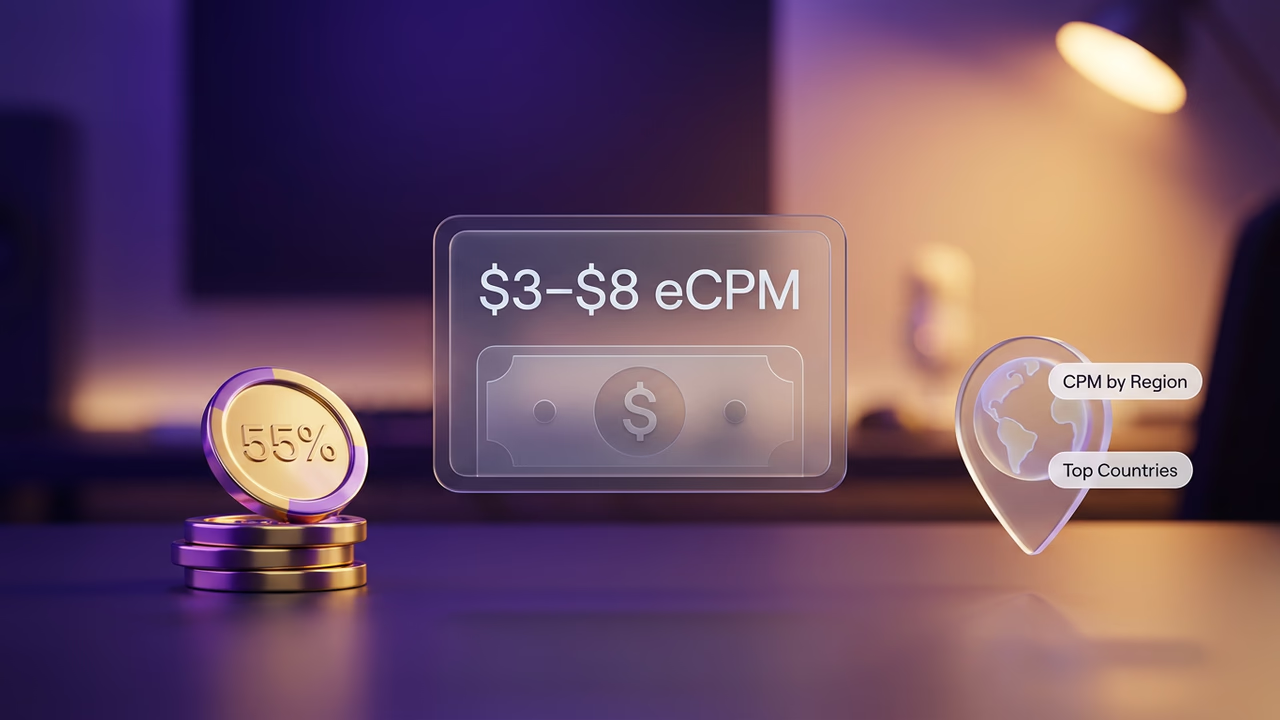
How Twitch ad revenue works (the 55% / 30% share)
Twitch runs ads on your stream and pays you a share of the revenue. The share depends on how many ad-minutes you run per hour: run at least 3 minutes per hour and you earn the full 55% rate; run fewer and you drop to a 30% share. This is the single most misunderstood part of Twitch ad income. Almost every article online quotes a CPM and stops there, ignoring that you only ever keep a slice of it. The headline 55% is your share of revenue, not the whole pie.
On top of the base share, Twitch runs an Ads Incentive Program that pays a flat bonus for hitting ad-minute and hours-streamed targets — commonly around $100 for 2 ad-minutes per hour over 40 hours, $300 for 3 minutes, and $500 for 4 minutes. The tradeoff is real: more ads mean more revenue but a worse viewer experience, so most streamers settle near the 3-minute threshold to unlock the 55% rate without driving viewers away.
Twitch CPM explained (and why it is an estimate)
CPM means cost per mille, or what an advertiser pays per 1,000 ad impressions. Twitch never publishes an official CPM, so every figure you see, including ours, is an informed estimate based on creator-reported data. CPM swings with your audience country, your content category, the season, and overall ad demand. Because of that, treat any single number with suspicion and think in ranges. What matters for your income is the effective rate you keep after the 55% share, not the gross CPM an advertiser pays.
Related Reading
How Much Do Twitch Streamers Make? (Real 2026 Earnings Data)
Where ad revenue fits among all five Twitch income streams, by channel size.
How to Make Money on Twitch: Every Revenue Stream Ranked
Why ads rank below subs and sponsorships for most streamers, with the full ranking.
Twitch Bits to USD: How Much Are Bits Actually Worth?
The other passive-ish stream: what bits pay you and how they compare to ads.
Twitch ad CPM by audience country
Where your viewers live is the biggest driver of ad CPM, because advertisers pay far more to reach some audiences than others. These are estimated gross CPM bands (what advertisers pay per 1,000 impressions); remember you keep 55% of this at the standard ad load.
Twitch ad CPM by category
Your content category shifts CPM too, because some audiences are worth more to advertisers. Higher-value categories like Just Chatting, esports, and finance or tech tend to attract premium ad rates, while music, ASMR, and some art streams sit lower. Just Chatting in particular punches above its weight, partly because of long watch times that generate more ad impressions per viewer.
How to estimate your ad revenue
The formula is simpler than the CPM debate suggests. Your ad impressions equal your average concurrent viewers multiplied by ad-minutes per hour multiplied by hours streamed in the month. Multiply that by your effective CPM (what you keep after the 55% share) and divide by 1,000.
Q4 vs January: how seasonality swings ad pay
Ad rates are seasonal because advertiser budgets are. The fourth quarter, especially November and December, sees CPMs spike as brands spend their holiday budgets, often pushing rates 1.5 to 2 times the yearly baseline. January is the opposite: budgets reset and demand collapses, so CPMs can fall to roughly half their normal level. The same 60,000 impressions can earn noticeably more in December than in January for identical content, which is why ad income looks lumpy across the year even when your viewership is steady.
Model Your Twitch Ad Revenue
Enter your viewers, ad-minutes, hours, country, and category to estimate ad income alongside subs and bits.
Open the Twitch Calculator