
Is "salary" the right way to think about Twitch income?
Salary is a misleading word for Twitch income, because nothing about it resembles a paycheck. It is uncapped at the top, has a floor of zero, varies month to month with your viewership and the season, and stops the moment you stop streaming. A better frame is income by channel size: what a streamer at your level of average concurrent viewers typically earns once you combine subs, bits, ads, and sponsorships. That is how we will break it down, and it is far more useful than any single "average" number.
The average that misleads: mean vs median
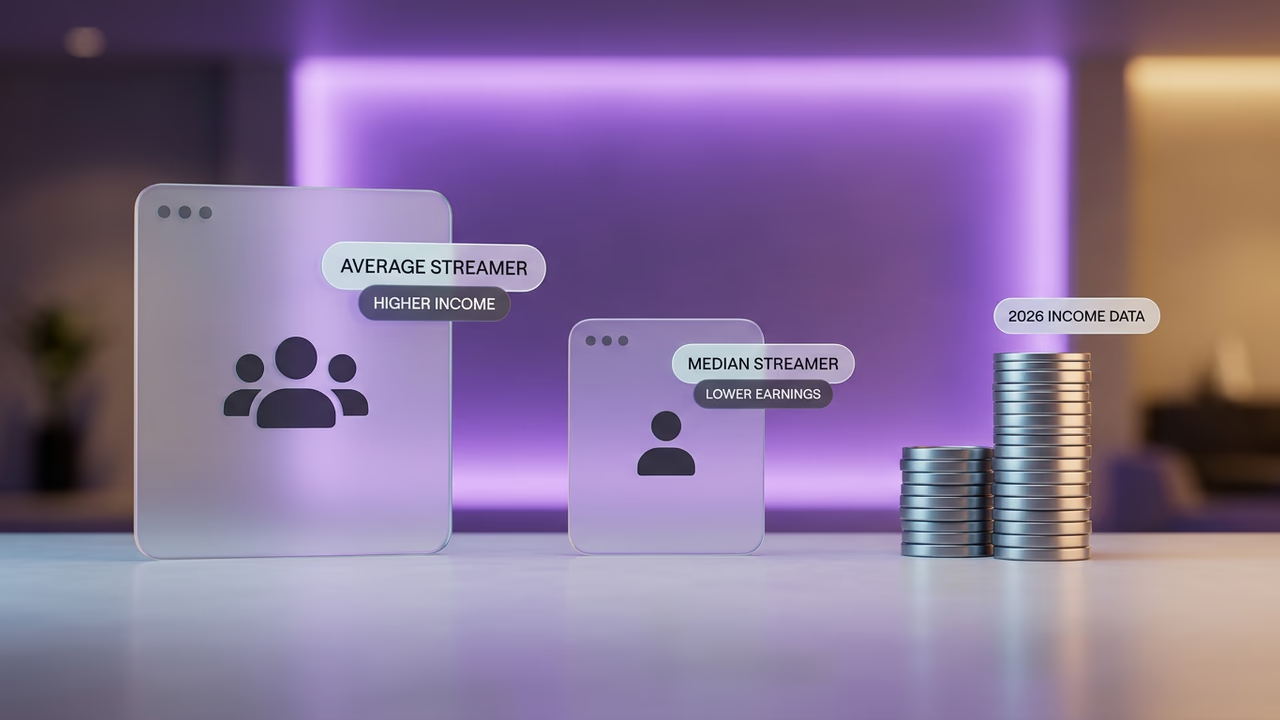
Search "Twitch streamer salary" and the top result is often a job-board figure claiming the average is over $130,000 a year. Ignore it. That number is scraped from job postings for the title "streamer," not from what creators actually receive from Twitch, and it badly distorts reality. The honest picture comes from payout data: a large majority of streamers earn little or nothing, the median active streamer makes only around $1,264 a year, and the top 1% of channels take more than half of all the money Twitch pays out. The gap between the mean and the median is the whole story.
Related Reading
How Much Do Twitch Streamers Make? (Real 2026 Earnings Data)
The companion overview: all five revenue streams and what the 2021 leak revealed.
How Much Does a Twitch Streamer Make Per Sub?
The per-sub math that makes up the steadiest part of any streamer's income.
How to Make Money on Twitch: Every Revenue Stream Ranked
The path from hobby income to a full-time salary, stream by stream.
Twitch income brackets: nano to top 1%
Here are honest monthly income ranges by average concurrent viewers, combining all revenue streams. These are blended estimates: a channel with a generous, high-CPM, US-heavy audience sits at the top of each band, while the same viewer count in a low-conversion category lands near the bottom.
What a full-time Twitch salary actually requires
A sustainable full-time income, roughly $3,000–$5,000 a month, generally requires around 150 or more average concurrent viewers, which in practice means a few hundred loyal subscribers plus the brand deals that open up at that size. It also takes hours: ad and sponsorship income are paid per hour of airtime, so a full-time streamer is typically live 100 or more hours a month across a consistent weekly schedule. Only an estimated 1–5% of streamers ever reach this level. Most who try treat Twitch as a serious side income for a long time before it could replace a job, if it ever does.
Salary stability: why sub-heavy channels are steadier
Two streamers earning the same monthly total can have very different income stability, and it comes down to their revenue mix. Subscriptions recur every month at a fixed $3.00–$4.19 each, behaving like predictable recurring revenue. Ad income is seasonal, swinging with Q4 and January advertiser budgets, and sponsorship income is lumpy and sporadic. A channel that leans on a large, loyal subscriber base has a far steadier "salary" than one of equal size that depends on sponsorships and ads, which is why building recurring subs is the closest thing to job security a streamer has.
Benchmark your channel against your tier
The most useful thing you can do with these brackets is locate yourself honestly. Take your true average concurrent viewers (not your peak), find your bracket, and remember that where you land within the range depends on your sub conversion, tier mix, audience country, and category. Rather than chasing a headline salary figure, plug your real numbers into the calculator to see a grounded estimate for your specific channel.
Benchmark Your Channel
Enter your average viewers, subs, niche, and country to see a realistic monthly income for your tier.
Estimate My Twitch Income