
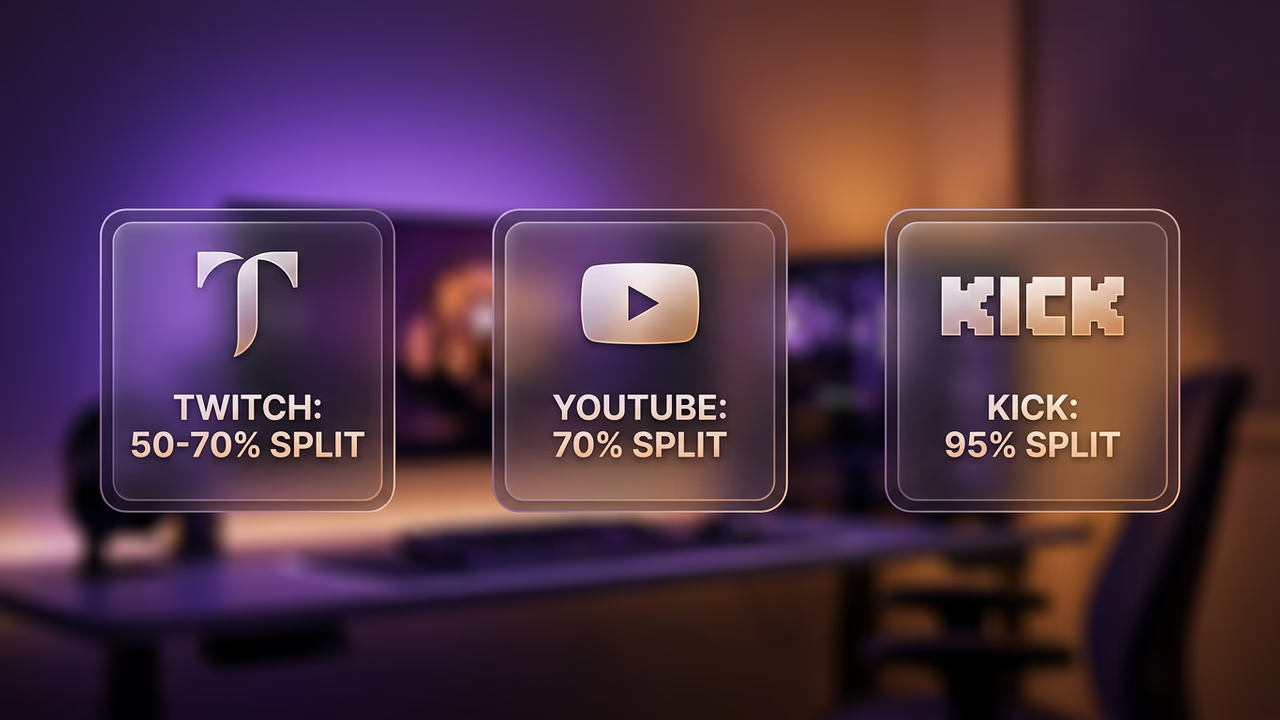
The headline: what each platform pays per sub
Most comparisons stop at the subscription split, and on that single metric Kick wins easily. But the platforms also price their subs differently and convert audiences into subscribers at different rates, so the split alone does not decide who pays more. Note that nearly every competing article still uses Twitch's old $4.99 price and a flat $2.50 per sub. Twitch Tier 1 is $5.99, and your take is $3.00 to $4.19 depending on your split, which changes the math.
Subscription economics compared
Scale the per-sub figures to a real sub base and the gap is clear, but so is Twitch's catch-up at the top split. Here is what 1,000 subscribers earns per month on each platform. Twitch's higher base price means that at the 70/30 split it nearly matches Kick despite the lower percentage.
Related Reading
What Pays More, YouTube or Twitch?
A focused head-to-head on YouTube versus Twitch monetization for the same audience.
How Much Do Twitch Streamers Make? (Real 2026 Earnings Data)
The full Twitch income picture by channel size and revenue stream.
How to Make Money on Twitch: Every Revenue Stream Ranked
Every Twitch income stream ranked, useful context for any platform comparison.
Ad revenue: Twitch CPM vs YouTube RPM
Subscriptions are only one stream, and ads tilt the picture toward YouTube. On Twitch you keep 55% of ad revenue at the standard ad load, for an effective $3–$8 per 1,000 impressions. YouTube pays an RPM (your share after its 45% cut) that varies enormously by niche, from a few dollars for gaming to well over $10 for finance or tech, and YouTube ads keep earning on your VODs long after a stream ends. Kick, by contrast, has historically leaned on its generous splits and incentive deals rather than a mature ad business, so ad income there is thin. For ad-driven income and long-tail VOD earnings, YouTube is usually the strongest of the three.
Sponsorships: which platform's audience pays more
Sponsorships are paid by brands, not the platform, so the split debate does not apply, but the audience does. Brands pay for engaged, brand-safe viewers, and a streamer's rate (commonly $0.80–$1.50 per concurrent viewer per sponsored hour) follows the audience, not the logo. Twitch and YouTube both offer large, sponsor-friendly audiences; Kick's more permissive content reputation can make some brands cautious. Above a few hundred concurrent viewers, sponsorships become the biggest income source on any platform, which is why audience size and engagement matter more than the sub split once you reach scale.
Multi-platform: why top streamers simulcast
The smartest answer to "which platform" is often "more than one." Streaming to multiple platforms at once, or repurposing your VODs into YouTube and TikTok clips, can lift total income 30–50% for the same hours live. The constraint is exclusivity: Twitch has at times restricted simulcasting to other major live platforms, while Kick and YouTube impose no such limits and actively court creators with deals. Many streamers now anchor live on one platform and use YouTube for VODs and discovery, capturing the best of each.
Which platform fits your goals?
There is no universal winner, only the right fit for your priority. Choose Kick if maximising per-sub cash today matters most and you can bring or build your own audience, since discovery is weaker. Choose Twitch if you want the largest live audience, the strongest subscriber and bits culture, and the best built-in discovery for growing from scratch. Choose YouTube if you value ad and VOD longevity, search-driven growth, and reaching viewers across live, long-form, and Shorts. For most serious streamers, the endgame is a combination, anchored where their community already is.
Run Your Numbers on Both Platforms
Compare your potential income side by side with the Twitch and YouTube earnings calculators.
Open the Twitch Calculator